Understanding Shares
Mergers, Name Changes, Buy-backs: What Can a Company Do to Your Shares?
By Oluwadamilola Ojo · 22 November 2026 · 4 min read
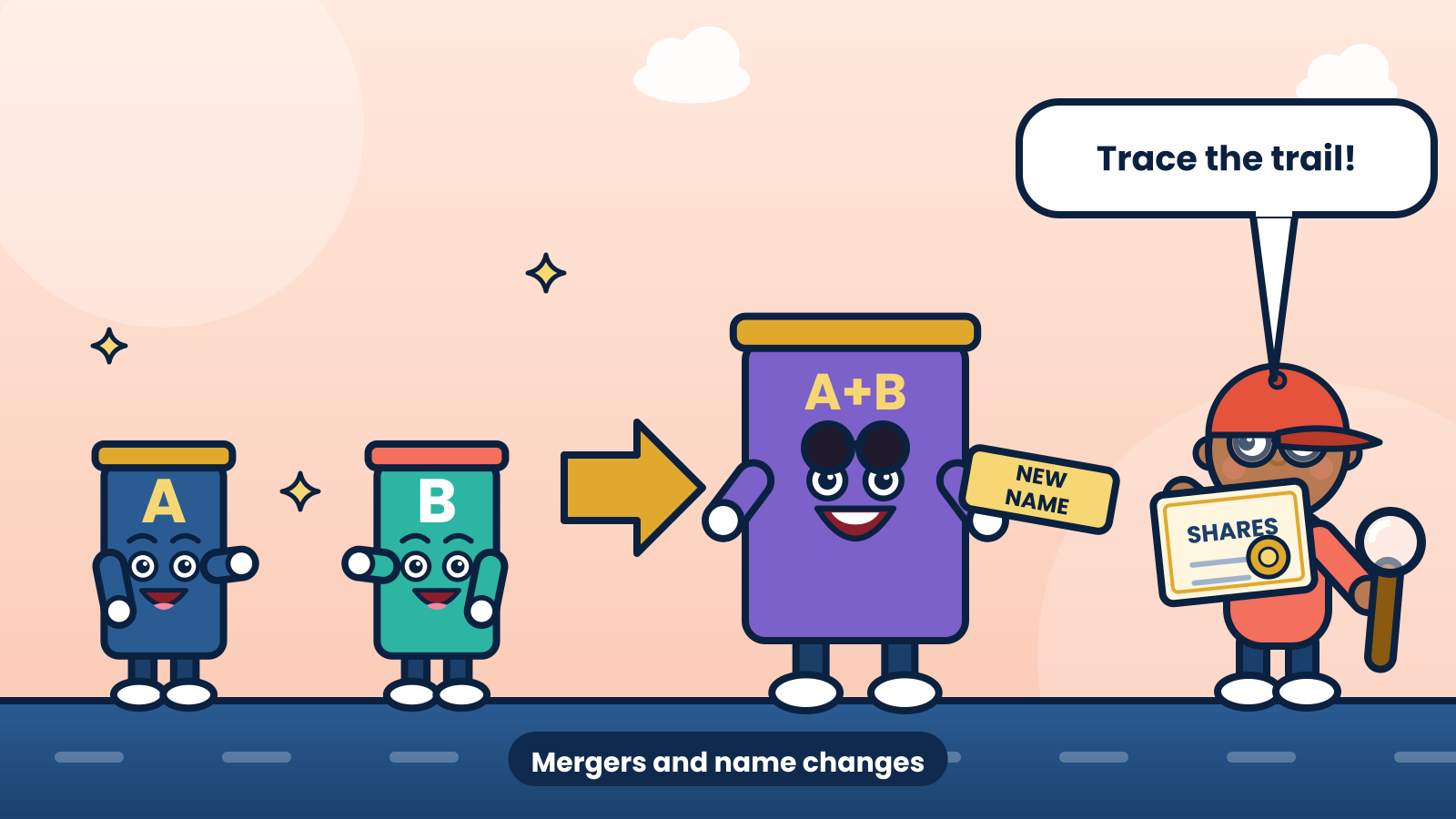
Mergers, Name Changes, Buy-backs: What Can a Company Do to Your Shares?
A corporate action is any decision by a company that changes something about its shares or what shareholders receive. Some happen often, some rarely. Some put money in your pocket, some ask for money, and some change only the number or name on your statement.
Knowing the full list means that when your holding changes, you can work out why, rather than assuming the worst.
Here in Nigeria
Here are the main corporate actions you may meet on the NGX. Each one is announced to the exchange and usually needs approval from shareholders, the SEC or both.
Corporate action |
What happens |
Effect on your holding |
Cash dividend |
Company pays part of its profit in cash |
Money paid to your bank account |
Bonus issue |
Free new shares in proportion to your holding |
More shares, lower price, same value |
Rights issue |
Offer to buy new shares at a discount |
You pay to keep your share of the company |
Share split |
Each share divided into smaller shares |
More shares, lower price, same value |
Share consolidation |
Several shares combined into one |
Fewer shares, higher price, same value |
Merger |
Two companies combine |
Your old shares swapped for new ones, cash, or both |
Acquisition or takeover |
Another company buys control |
You may be offered cash or shares for your holding |
Name change |
Company changes its name |
Same shares, new name and often a new symbol |
Share buy-back |
Company buys back its own shares |
Fewer shares in issue. You can choose whether to sell |
Scheme of arrangement |
Court-approved restructuring |
Your shares converted according to the scheme |
Delisting |
Company leaves the exchange |
You still own shares, but cannot trade them on NGX |
Nigerian banking history is full of these. Bank mergers in the 2000s turned shares of dozens of banks into shares of a smaller number of larger ones. Several companies later reorganised into holding company structures, where shareholders of the old company received shares in a new holding company in exchange.
A simple example
Follow one made-up holding over twenty years:
2004: Mr Bello buys 10,000 shares in Eastern Trust Bank.
2006: Eastern Trust merges into Sunrise Bank. He receives 1 Sunrise share for every 2 Eastern shares: 5,000 shares.
2010: Sunrise Bank declares a 1-for-5 bonus issue: 6,000 shares.
2014: Sunrise Bank renames itself Unity Bank. Still 6,000 shares, new name.
2019: Unity Bank restructures into Unity Holdings Plc. He receives 1 holding company share for each bank share: 6,000 Unity Holdings shares.
2025: Unity Holdings runs a rights issue. He does nothing, and his rights lapse.
Mr Bello still owns 6,000 shares, plus any dividends paid over twenty years. But if he only remembers "Eastern Trust Bank", he might think the shares disappeared long ago.
Why this matters to you
Corporate actions are why old share papers can be so confusing, and also why they are worth following up. A company name you do not recognise today may simply be the latest name of a company your family invested in long ago.
For your current holdings, read every notice from the company or registrar. Some corporate actions, like rights issues and buy-back offers, need you to act before a deadline.
What people often get wrong
"If the company name disappeared, the investment is dead." Most often it merged, was renamed or was restructured.
"Corporate actions happen to the company, not to me." Many of them change your holding directly, and some require a decision from you.
"The registrar will contact me if anything changes." It will try, using the details it has. If those details are old, the message may never reach you.
The one thing to remember
Companies can merge, rename, split, consolidate and restructure. Through all of it, your ownership usually continues in some form. Follow the trail. |
Over to you
Is there a company name on old family papers that you no longer see on the exchange? Have you ever tried to trace what it became?