Understanding Shares
What Is Your CSCS Statement Really Telling You?
By Oluwadamilola Ojo · 19 November 2026 · 4 min read
What Is Your CSCS Statement Really Telling You?
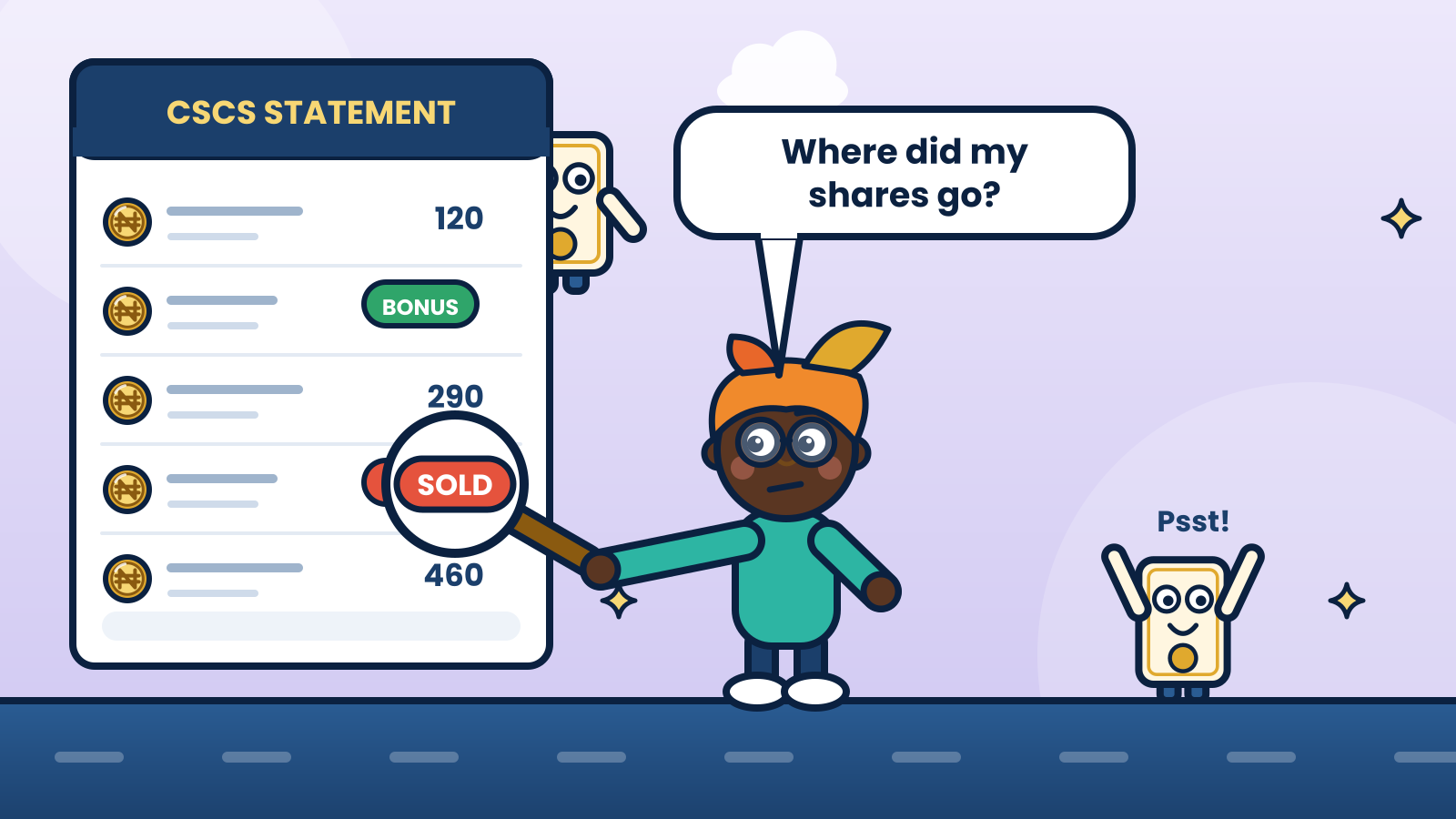
A CSCS statement is a report of the listed shares held in your name in the central system. It is to shares what a bank statement is to money and it shows what you hold, how much of it, and what moved in and out over a period.
Many people never look at theirs. They rely on a broker's app or on memory, but the statement is the independent record, and reading it is a skill every shareholder should have.
A typical statement shows:
Your details: name, investor number and the broker code your shares sit under.
Each holding: the company or stock symbol and the number of shares.
Movements: purchases, sales, bonus shares, rights shares and transfers, with dates.
Sometimes a value: the number of shares multiplied by a recent price. This value changes daily, because prices change.
Here in Nigeria
CSCS provides statements to investors, and many brokers can request one for you or show the same information in their apps. CSCS has also offered ways for investors to receive alerts or check holdings directly. The exact options change over time, so ask your broker how to get an up-to-date statement.
Statements are especially useful in three Nigerian situations:
After a corporate action. When a company issues bonus shares or completes a rights issue, check that the new shares have actually landed in your account.
When you have used more than one broker. Your holdings may be spread across broker codes. The statement shows them together.
When something feels wrong. If you see a sale you did not make, raise it at once with your broker and CSCS.
A simple example
Here is a simplified statement for a made-up investor, Bola. The companies and figures are invented.
Stock |
Opening balance |
Movement |
Closing balance |
DELTAFOOD |
1,000 |
+100 bonus shares (1 for 10) |
1,100 |
SUNBANK |
5,000 |
-2,000 sold on 12 March |
3,000 |
COASTCEM |
0 |
+500 bought on 20 March |
500 |
HARBOURINS |
10,000 |
No movement |
10,000 |
How to read it:
DELTAFOOD grew from 1,000 to 1,100 shares without Bola paying anything. That was a bonus issue. The value of each share usually adjusts down, so his total value did not jump by 10%.
SUNBANK fell by 2,000 because he sold. He should check that the money from the sale reached his bank account.
COASTCEM is new. He bought it this month.
HARBOURINS did not move. That is normal. Shares do not have to trade to remain yours.
If Bola's statement showed only three companies but he knows he owns four, the missing one may still be on paper with a registrar, or sitting under a different name or account.
Why this matters to you
Checking your statement every few months is a simple habit that protects you. It confirms that what you think you own is what the system says you own. It catches errors early, when they are easy to fix. And it gives you a clean list to share with your family or your executor one day.
It is also the starting point for tracing missing shares. If a company you know you invested in is not on your statement, that gap is a clue worth following.
What people often get wrong
"The value on my statement is what I will get if I sell." Not exactly. The value uses a recent price. The price you get when you sell depends on the market at that moment, minus fees.
"My dividends will show on my CSCS statement." Usually not. The statement shows shares. Dividends are paid by the registrar into your bank account. To check dividends, look at your bank statement and ask the registrar.
"If a company is not on my statement, I do not own it." Not always. Shares that were never dematerialised can still be yours, recorded only with the registrar.
The one thing to remember
Your CSCS statement is the independent record of the listed shares you own. Read it, compare it with what you believe you own, and follow up anything that does not match. |
Over to you
When did you last see your CSCS statement? If you looked today, do you think it would show everything you believe you own?
This article is for education only and is not investment advice. Company names, prices and figures in the examples are made up to show how things work. Rules, rates and fees change, so check the current position before acting.