Understanding Shares
Why Do So Many Nigerians Own Bank Shares They Have Forgotten About?
By Oluwadamilola Ojo · 22 November 2026 · 4 min read
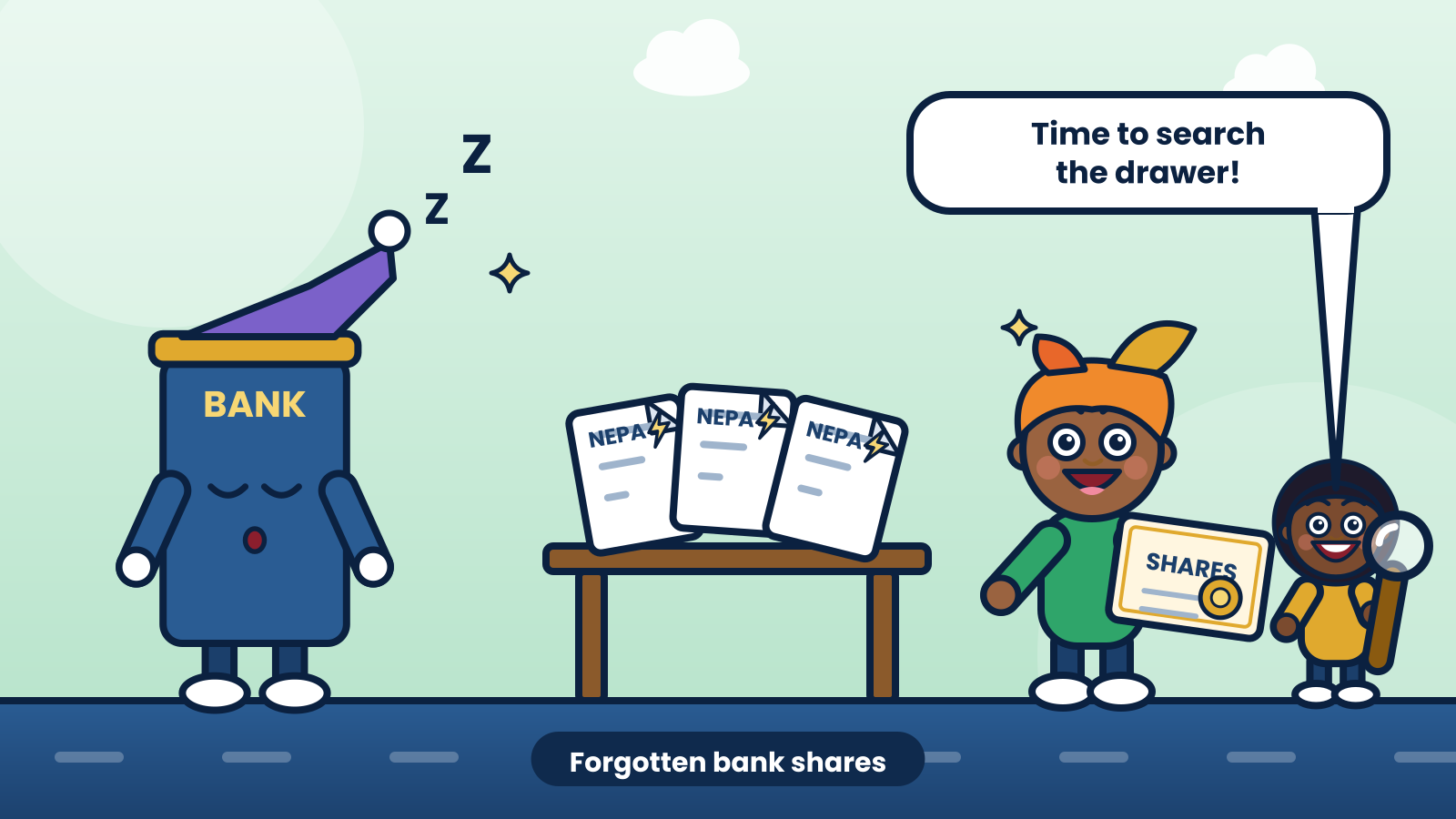
Why Do So Many Nigerians Own Bank Shares They Have Forgotten About?
In 2004 and 2005, something happened that turned millions of ordinary Nigerians into shareholders almost overnight. Banks were told they needed much more capital, and they raised much of it by selling shares to the public. People queued at bank branches. Offices organised group applications. Parents bought shares in their children's names.
Many of those shareholders never followed up. Within a few years, there were mergers, name changes and a market crash. Certificates went missing, addresses changed, and bank accounts were closed. The result is that a large share of Nigeria's unclaimed dividends traces back to this period.
Here in Nigeria
In 2004 the Central Bank of Nigeria announced that every bank must raise its minimum capital to ₦25 billion by the end of 2005. At the time, many banks had far less. To meet the deadline, banks did three things: they sold new shares to the public, they merged with other banks, or they were taken over. The number of banks fell from around 89 to about 25.
For ordinary Nigerians, this created a wave of public offers. Many people bought shares for the first time, often in more than one bank. Some applications were made in slightly different versions of the same name, or with addresses and phone numbers that later changed.
Then came the boom, and then the 2008 to 2009 crash, when many bank share prices fell sharply. Some banks were later rescued, merged again or renamed. Many first-time shareholders were disappointed and simply stopped paying attention.
A simple example
Here is a typical story, with made-up names and numbers.
Year |
What happened |
What Mrs Eze has |
2005 |
She buys 20,000 shares each in two bank offers, using her maiden name |
Two allotment letters and two certificates |
2006 |
One bank merges into another |
Her shares are converted into the new bank's shares |
2008 |
She marries, changes her name and moves house |
Registrars still have her maiden name and old address |
2009 |
Prices crash. She stops checking |
Certificates go into a drawer |
2010 onwards |
Both banks declare dividends in several years |
Dividends go unpaid because there is no bank account on file |
Today |
She finds the papers |
Her shares may still be there, with years of unclaimed dividends |
Suppose one of the banks paid an average of ₦0.50 per share for twelve years on her 20,000 shares, before tax. That alone would be ₦120,000, plus the value of the shares themselves. The numbers are illustrative, but stories like this are common.
Why this matters to you
If you, your parents or other relatives bought bank shares in the mid-2000s, it is worth checking. Even holdings that seemed small at the time may now include bonus shares and many years of dividends. The documents you need are often in a drawer: allotment letters, certificates, letters from registrars, even old bank statements showing the payment for the shares.
What people often get wrong
"The crash wiped out those shares." Prices fell, sometimes very sharply, and some banks were restructured. But many shareholders still hold shares in the successor banks.
"I only bought a little, so it is not worth chasing." Small holdings grow with bonus issues, and dividends add up over years.
"The bank I bought into no longer exists, so there is nothing to find." Most banks from that period merged or were renamed. The shares followed.
The one thing to remember
The bank recapitalisation of 2005 made millions of Nigerians shareholders. Many of those shares, and the dividends paid on them since, are still waiting to be claimed. |
Over to you
Did you or anyone in your family buy bank shares around 2005? Do you know what happened to them after the mergers and the crash?