Understanding Shares
You Sold Your Shares, So Why Isn't the Money in Your Account Yet?
By Oluwadamilola Ojo · 19 November 2026 · 3 min read
You Sold Your Shares, So Why Isn't the Money in Your Account Yet?
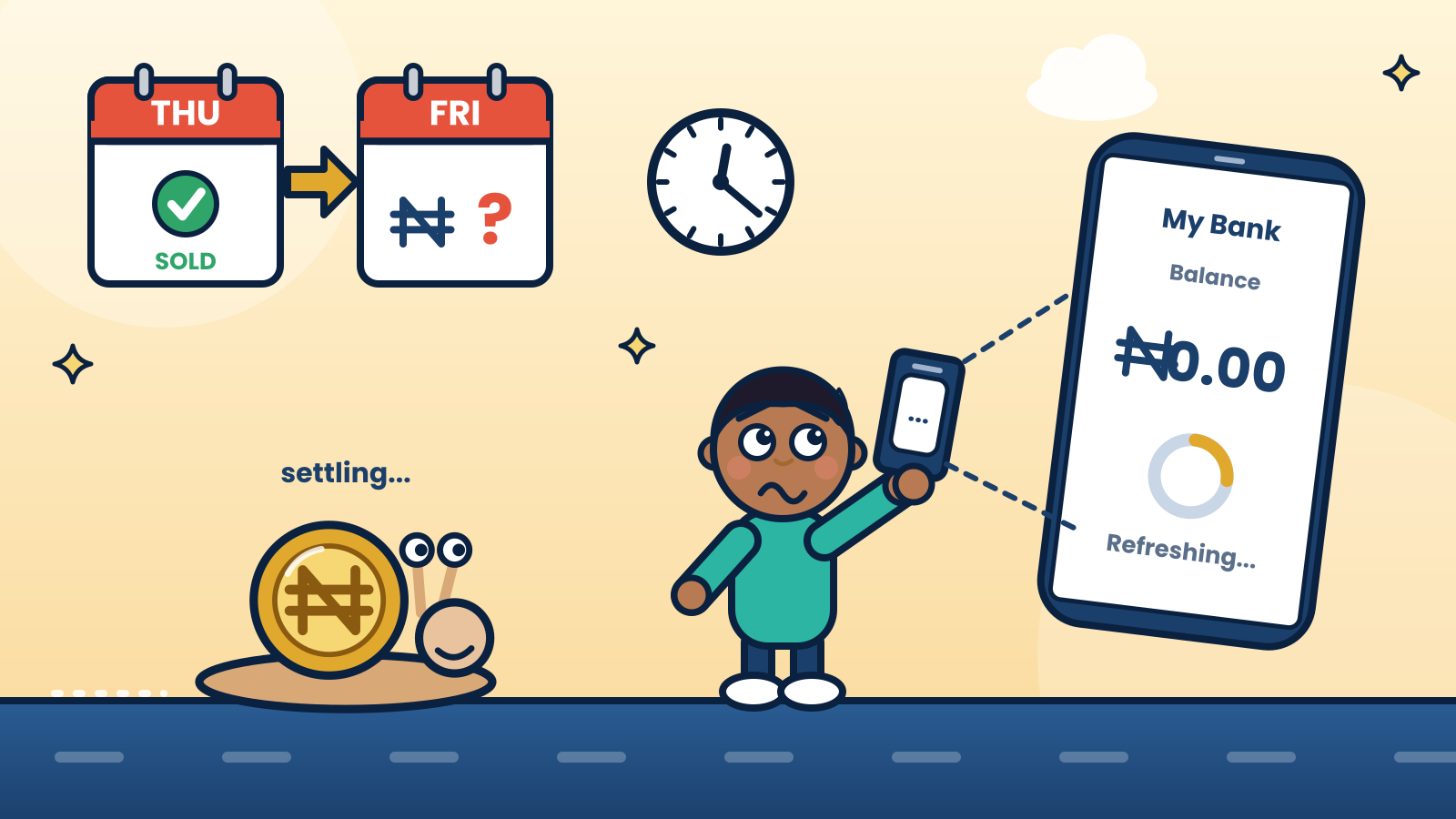
When you sell shares, two things have to happen: the shares must leave your account and go to the buyer, and the money must leave the buyer and come to you. Matching the trade happens in seconds. Completing the exchange of shares and money takes a little longer. That completion is called settlement.
Markets describe settlement with a simple code: T + a number. "T" is the trade date, the day your sale happened. The number is how many working days later settlement happens. So "T+2" means settlement two working days after the trade.
After settlement, the money is in your broker account. Getting it from there into your own bank account is a further step, which depends on your broker.
Here in Nigeria
A few practical facts about the Nigerian market. Check current details with your broker, because hours and rules are updated from time to time.
Trading days: Monday to Friday, except public holidays.
Trading hours: the main trading session runs for a few hours in the morning and early afternoon, roughly from 10:00 a.m. to 2:30 p.m.
Settlement: Nigeria has used a cycle measured in a few working days after the trade, and regulators have been working to shorten it. Ask your broker which cycle currently applies.
Holidays: if a public holiday falls between the trade and settlement, it does not count as a working day, so settlement moves later.
A simple example
Kunle sells 5,000 shares of a made-up company at ₦30 on a Thursday. Assume a T+2 settlement cycle and fees of about 1.5% in total. The fees are made up.
Day |
What happens |
Kunle's position |
Thursday (T) |
Trade matched on the exchange |
Sale confirmed, contract note issued |
Friday (T+1) |
Clearing and checks |
Shares still being processed |
Saturday and Sunday |
Not working days |
No change |
Monday (T+2) |
Settlement |
₦150,000 minus about ₦2,250 in fees = ₦147,750 in broker account |
Tuesday or later |
Kunle asks for a withdrawal |
Money arrives in his bank, depending on the broker |
If Monday were a public holiday, settlement would move to Tuesday. So a Thursday sale might only become money in his bank account the following Wednesday.
Why this matters to you
If you need money for something with a deadline, such as school fees, rent or a hospital bill, do not wait until the last day to sell shares. Plan for settlement plus withdrawal time, and add a few extra days for holidays and delays.
It also explains why dividends depend on dates. To be entitled to a dividend, your purchase must be settled and recorded by a certain date. We explain those dates in the next phase of the series.
What people often get wrong
"I sold, so the money is mine immediately." The sale is agreed immediately. The money arrives after settlement, and then after your broker processes the withdrawal.
"My broker is holding my money on purpose." Sometimes there are delays, and you should follow them up. But a few days is normal and is built into how the market works.
"Weekends count." Settlement counts working days only.
The one thing to remember
A trade happens in seconds, but settlement takes working days. If you will need the money by a certain date, sell early enough to allow for settlement and withdrawal. |
Over to you
Have you ever needed money from shares in a hurry? How long did it actually take to reach your bank account?